
Many businesses collect data every day, but the real challenge is knowing what to do with that data when something changes.
A temperature rises in a refrigerator. A cold room starts behaving differently. A storage area experiences repeated fluctuations. If this information is available only during a manual inspection, there may be a significant delay before anyone responds.
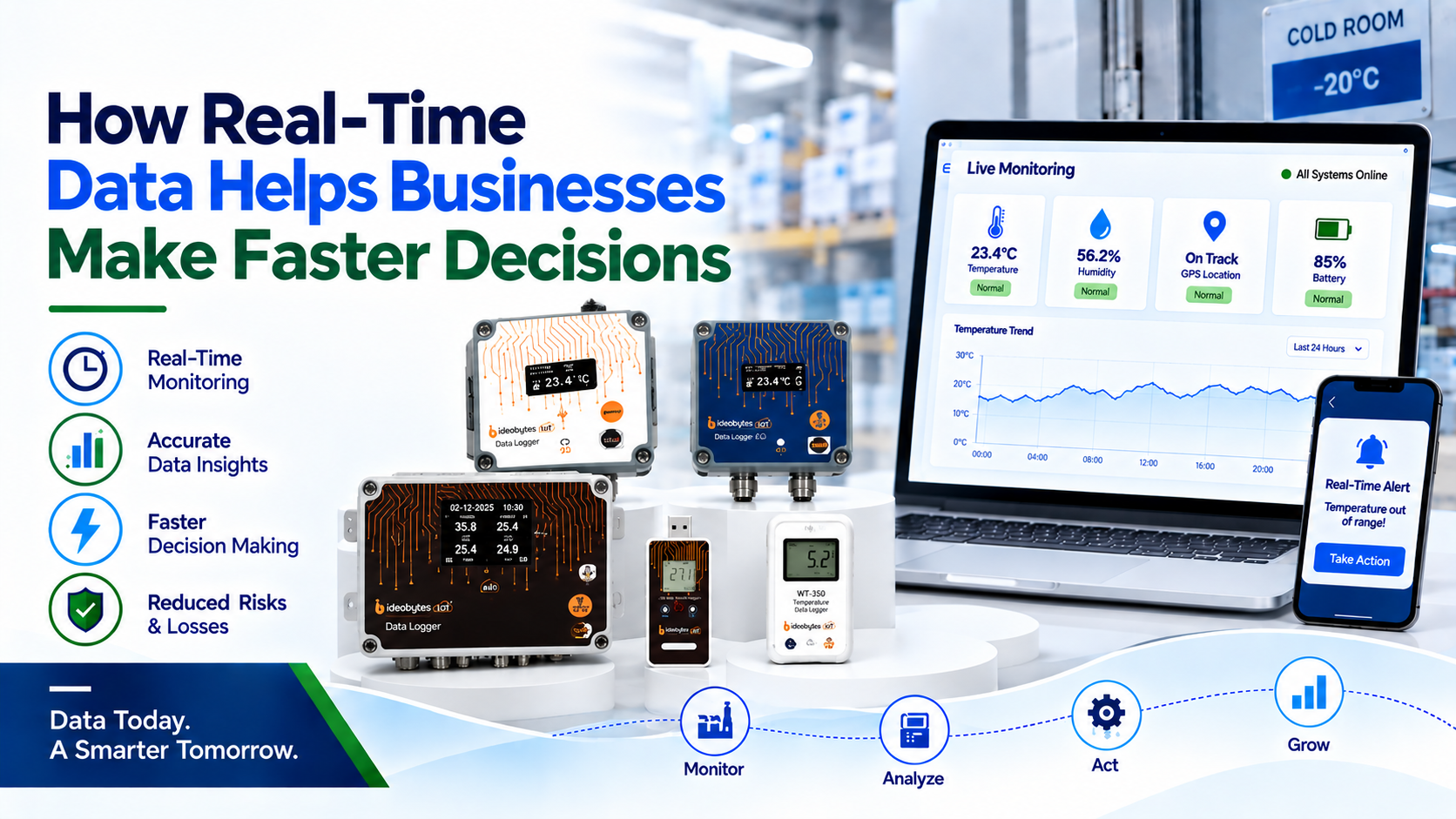
Real-time monitoring changes this process by making important conditions visible as they happen.
From Manual Checks to Live Information
Traditional monitoring usually depends on someone checking equipment at fixed intervals.
This approach can miss what happens between two checks.
An IoT monitoring system continuously collects readings and makes the information available through a connected platform. Teams can check current conditions without being physically present at the location.
Better Visibility Across Operations
When several storage areas or devices need monitoring, keeping track of everything manually becomes difficult.
A centralized monitoring system can bring information from multiple points into one place.
This can help businesses understand:
- Current operating conditions
- Temperature trends
- Previous readings
- Abnormal changes
- Alarm events
- Equipment performance patterns
Instead of maintaining separate manual records, teams can work with one digital source of information.
Respond Before a Small Issue Becomes a Bigger Problem
One of the biggest advantages of real-time monitoring is the ability to react earlier.
For example, a gradual temperature increase in a pharmaceutical refrigerator may indicate a developing cooling problem. An alert can bring the issue to someone’s attention before the temperature reaches a critical level.
The system does not replace human decision-making. It simply provides the information needed to make that decision sooner.
Useful Data Beyond Temperature
Modern IoT monitoring can be used for more than temperature alone.
Depending on the application, businesses may monitor:
- Humidity
- CO₂
- Differential pressure
- Equipment conditions
- Power-related events
- Other environmental parameters
This makes IoT monitoring useful across laboratories, healthcare facilities, pharmaceutical storage, warehouses and industrial environments.
Build a Record of What Happened
Another advantage is having historical data.
When an issue occurs, businesses can review previous readings instead of relying only on memory or manual notes.
This can help during:
- Internal reviews
- Maintenance investigations
- Quality checks
- Compliance documentation
- Process improvement
Over time, these records can also help businesses identify recurring operational issues.
Why This Matters for Growing Businesses
As operations grow, the number of locations, devices and monitoring points can increase.
A monitoring system that provides remote access and centralized information can make it easier to manage this expansion without increasing manual checking at the same rate.
For businesses handling temperature-sensitive products, <a href=”https://techmedsmartsense.com/”>smart temperature monitoring solutions</a> can provide continuous visibility across critical storage and monitoring environments.
Conclusion
Good business decisions depend on having the right information at the right time.
Real-time IoT monitoring gives businesses continuous visibility into important operating conditions, helping teams identify changes, investigate issues and maintain better records.
The value is not simply in collecting more data. It is in making that data available when it matters.