

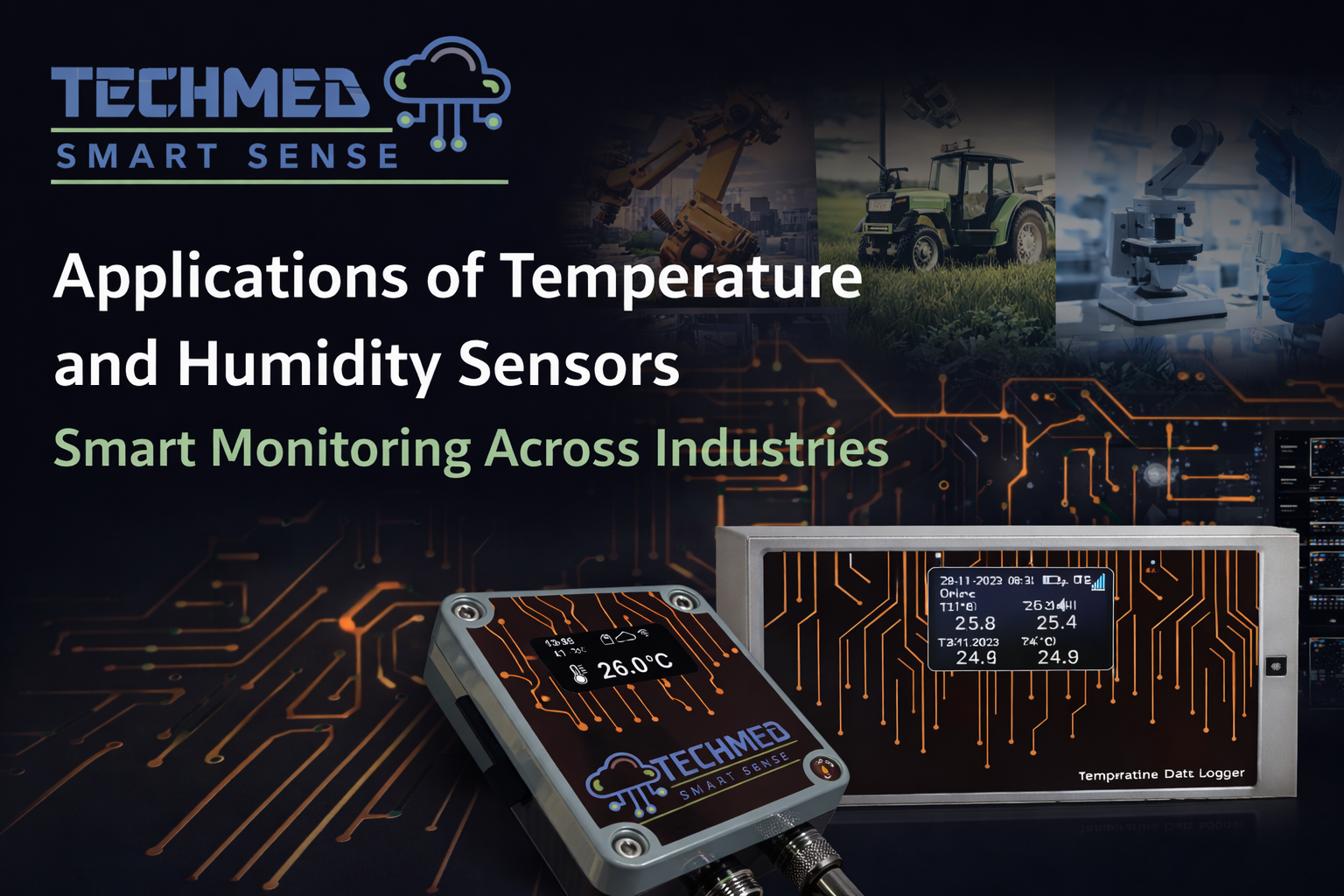
Temperature and humidity sensors are essential tools that measure environmental conditions like air temperature and moisture. These devices play a key role in many modern applications — from industrial automation and weather tracking to laboratory compliance and cold chain logistics.
Today, businesses across sectors rely on sensors for real-time monitoring, risk mitigation, and operational efficiency. Let’s explore the top applications of temperature and humidity sensors and why they matter so much.
1. Pharmaceutical & Cold Chain Storage
Pharmaceutical products, vaccines, biologics, and reagents must be stored under precise environmental conditions. Any deviation in temperature or humidity can compromise product quality and shelf life.
By using WiFi temperature and humidity sensors or temperature & humidity data logger Delhi systems, facilities ensure continuous monitoring and instant alerts to prevent spoilage or compliance issues.
2. Healthcare & Laboratory Monitoring
Healthcare environments, including hospital wards, operating rooms, and diagnostic labs, need accurate temperature and humidity control. For example, correct humidity levels help maintain sterility, prevent microbial growth, and protect sensitive equipment. Medical facilities often combine sensors with automated systems to maintain ideal conditions.
3. HVAC & Building Environment Control
Heating, Ventilation, and Air Conditioning (HVAC) systems use temperature and humidity sensors to regulate indoor comfort, energy efficiency, and air quality.
Smart HVAC systems automatically adjust heating or cooling based on real-time sensor data — improving comfort and reducing energy consumption.
4. Agriculture & Greenhouse Management
Farms and greenhouses use sensors to monitor micro-climate conditions for optimum plant growth. Temperature and humidity sensors help maintain ideal ranges that prevent plant stress, boost crop yield, and reduce water waste.
5. Weather Monitoring & Forecasting
Weather stations and meteorological observatories rely on networks of temperature and humidity sensors to collect atmospheric data. These sensors help predict weather patterns, rainfall, and extreme weather events with greater accuracy.
6. Industrial Automation & Process Control
Manufacturing plants use environmental sensors to ensure process stability, maintain product quality, and protect equipment. For critical processes, even slight temperature or moisture changes can impact quality, safety, and efficiency.
7. Cold Storage & Food Safety
In cold storage warehouses and food processing units, temperature and humidity are vital for food safety and freshness. Continuous monitoring helps businesses comply with safety standards, prevent spoilage, and reduce waste. Integrating these sensors with systems like remote temperature data logger Delhi improves visibility and control.
8. Data Centers & Electronics Protection
Server rooms and data centers require precise climate control to ensure optimal performance and prevent hardware failure. High humidity can cause corrosion, while excessive heat can cripple equipment. Temperature and humidity sensors provide continuous monitoring and trigger cooling systems when needed.
9. Smart Homes & Energy Management
Smart home systems use combined temperature and humidity sensors for comfort and energy efficiency. These sensors help thermostats and climate systems adjust automatically based on environmental conditions, improving comfort and lowering energy bills.
10. Agricultural Research & Environmental Science
Scientists and researchers use sensors to study climate patterns, soil moisture, plant environments, and other environmental variables. These readings help in planning, forecasting, and analyzing long-term ecological trends.
Why Businesses Need Smart Monitoring
With the rise of connected systems, temperature and humidity sensors are often integrated with cloud dashboards, mobile alerts, and data loggers. These smart systems provide:
✔ Real-time monitoring
✔ Instant alerts and notifications
✔ Cloud data storage & reporting
✔ Audit-ready logs for compliance
✔ Remote access from anywhere
For businesses in Delhi, choosing solutions like a WiFi temperature and humidity sensor Delhi ensures safety, reduces loss, improves compliance, and enhances productivity.
Conclusion
Temperature and humidity sensors are vital components of modern environmental and industrial monitoring systems. Their applications span industries—from healthcare and agriculture to cold chain logistics and smart homes—making them indispensable tools for data-driven decisions, quality control, and automation.
If you’re looking for reliable monitoring tools, consider advanced systems from TechMed Smart Sense that offer robust performance and unparalleled accuracy.
Get started today: https://techmedsmartsense.com/contact/
Tag = cloud data logger Delhi, cellular data logger Delhi, real time data loggers Delhi