
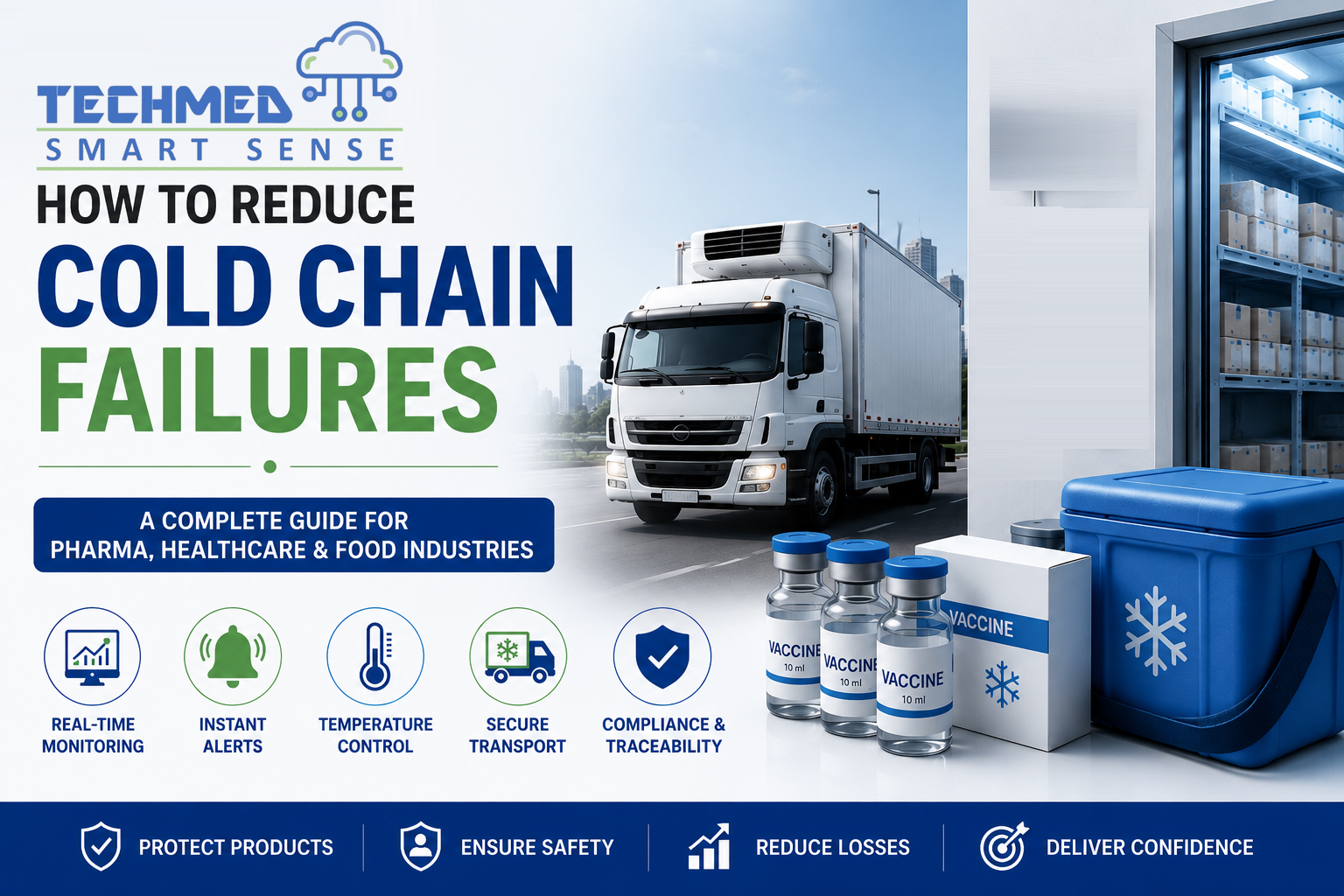
Every year, businesses lose millions because of cold chain failures. Vaccines lose their potency, medicines become ineffective, food products spoil, and sensitive laboratory samples are damaged—all because the right temperature wasn’t maintained during storage or transportation.
The biggest challenge is that most cold chain failures aren’t caused by major disasters. They often begin with small issues like a power outage, a faulty refrigerator, or delayed response to a temperature alarm.
The good news? Most of these failures can be prevented with the right monitoring system and operational practices. Businesses investing in data loggers in Delhi are significantly improving product safety and reducing costly losses.
What is a Cold Chain Failure?
A cold chain failure occurs when temperature-sensitive products are exposed to conditions outside their recommended storage or transportation range.
Even a short temperature excursion can compromise:
- Vaccines
- Medicines
- Blood products
- Biological samples
- Laboratory reagents
- Food and dairy products
Once these products are exposed to incorrect temperatures, their quality and effectiveness may be permanently affected.
Common Causes of Cold Chain Failures
Understanding the causes is the first step toward preventing them.
1. Power Outages
Unexpected power failures can quickly increase refrigerator or cold room temperatures if backup systems are unavailable.
2. Equipment Breakdown
Compressors, thermostats, fans, or refrigeration units may fail without warning.
3. Manual Temperature Monitoring
Recording temperatures only two or three times a day leaves long periods without monitoring, allowing issues to go unnoticed.
4. Human Error
Examples include:
- Refrigerator doors left open
- Incorrect thermostat settings
- Missed temperature recordings
- Delayed response to alarms
5. Poor Maintenance
Dirty condensers, worn seals, and neglected servicing reduce refrigeration efficiency and increase the risk of failures.
Warning Signs Your Cold Chain Is at Risk
Many facilities experience early warning signs before a major failure.
Watch for:
- Frequent temperature fluctuations
- Frost build-up inside refrigerators
- Unusual compressor noise
- Delayed cooling
- Temperature alarms occurring repeatedly
- Inconsistent manual records
Ignoring these warning signs can lead to product loss and compliance issues.
How to Reduce Cold Chain Failures
Install Continuous Temperature Monitoring
Instead of relying on manual checks, use an automated temperature monitoring device Delhi that records temperature 24/7.
Continuous monitoring helps detect problems immediately.
Enable Real-Time Alerts
Modern monitoring systems send:
- SMS alerts
- Email notifications
- Mobile app alerts
This allows staff to respond before products are damaged.
Monitor Temperature and Humidity Together
Some products are sensitive not only to temperature but also to humidity.
Using combined monitoring provides better environmental control.
Schedule Preventive Maintenance
Regular servicing helps identify problems before equipment fails.
Maintain:
- Compressors
- Cooling fans
- Sensors
- Door seals
- Refrigerant levels
Train Staff Regularly
Even the best equipment cannot compensate for poor handling practices.
Train employees on:
- Correct storage procedures
- Alarm response protocols
- Temperature documentation
- Emergency procedures
Maintain Backup Power
Install UPS systems or generators to keep refrigeration equipment operational during electrical outages.
Keep Accurate Digital Records
Automatic temperature logging provides:
- Historical data
- Audit-ready reports
- Compliance documentation
- Performance trends
This reduces paperwork while improving traceability.
Solutions like Smart Sense Data Logger Delhi automatically store and organize temperature records for easy access.
Industries That Benefit from Cold Chain Monitoring
Continuous monitoring is essential for:
Pharmaceutical Manufacturers
Protect medicines and biological products during storage.
Hospitals
Monitor vaccine refrigerators, blood banks, and medical refrigerators.
Laboratories
Maintain stable storage for research samples and reagents.
Food & Beverage Companies
Prevent spoilage during storage and distribution.
Cold Storage Warehouses
Monitor multiple cold rooms from one centralized dashboard.
Why Smart Data Loggers Make the Difference
Traditional thermometers only show the current temperature.
Smart data loggers provide:
- Continuous temperature recording
- Remote monitoring
- Cloud-based dashboards
- Instant alerts
- Historical reports
- Multi-location monitoring
- Automated compliance documentation
This gives facility managers complete visibility over their cold chain operations.
Why Choose Techmed Smart Sense?
Techmed Smart Sense offers advanced environmental monitoring solutions for healthcare, pharmaceutical, food, and industrial applications.
Our Solutions Include:
- Temperature Data Loggers
- Wi-Fi Data Loggers
- Cold Room Monitoring Systems
- Vaccine Refrigerator Monitoring
- Blood Bank Monitoring
- Medical Refrigerator Monitoring
- Temperature & Humidity Monitoring
- Remote Cloud Monitoring
Our Smart Sense Data Logger Delhi helps organizations reduce cold chain failures through continuous monitoring and instant alerts.
Conclusion
Cold chain failures rarely happen without warning. Most begin with small problems that go unnoticed until products are already compromised.
By adopting continuous monitoring, real-time alerts, preventive maintenance, and smart operating practices, organizations can significantly reduce the risk of product loss and compliance issues.
Investing in reliable data loggers in Delhi is one of the most effective ways to protect temperature-sensitive products and ensure uninterrupted cold chain performance.