
A refrigerator showing 5°C may seem perfectly normal. But what happened during the last 12 hours?
Did the temperature briefly rise to 12°C during a power fluctuation? Did the cold room door remain open longer than expected? Did the refrigeration system struggle overnight?
These are the questions that manual temperature checks cannot answer.
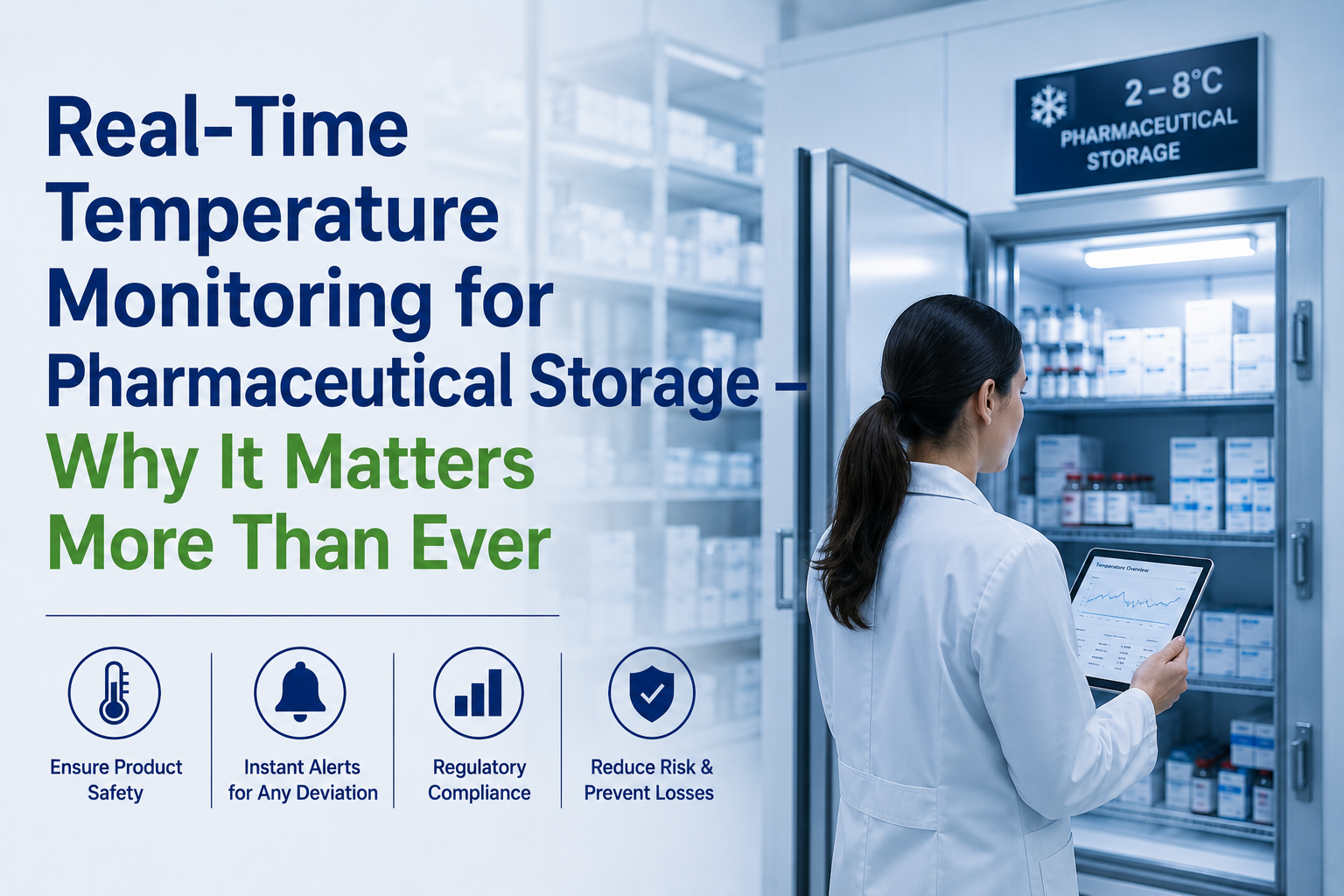
For pharmaceutical companies, hospitals, distributors, and healthcare facilities, maintaining the correct storage temperature is critical. Even short temperature excursions can affect product quality, compliance, and patient safety. This is why many organizations are moving toward real-time monitoring using data loggers in Delhi.
The Hidden Risk in Pharmaceutical Storage
Most temperature-related losses do not happen because facilities lack refrigeration.
They happen because problems are discovered too late.
Consider a common scenario:
- Cold room temperature increases at midnight.
- Staff members are not on-site.
- The next manual temperature check is at 8 AM.
- Products remain exposed for several hours.
By the time the issue is discovered, medicines or vaccines may already be compromised.
Continuous monitoring helps detect problems as they happen instead of after the damage is done. Temperature monitoring devices are widely used because temperature excursions can degrade products and are often required for compliance in regulated storage environments.
Why Manual Temperature Recording Is No Longer Enough
Many facilities still maintain paper-based temperature logs.
While these records may satisfy basic documentation requirements, they often fail to provide:
- Real-time visibility
- Immediate alerts
- Historical trend analysis
- Remote access
- Automated reporting
Manual monitoring creates gaps between readings, leaving facilities vulnerable to undetected temperature excursions.
What Is Real-Time Temperature Monitoring?
Real-time temperature monitoring uses connected sensors and data loggers to continuously record environmental conditions.
Instead of waiting for staff to manually check temperatures, the system automatically:
- Records readings 24/7
- Stores historical data
- Generates reports
- Sends alerts when limits are exceeded
- Allows remote monitoring through web or mobile platforms
Modern cold-chain monitoring systems increasingly rely on continuous data logging, remote access, and instant alerts to maintain storage integrity and compliance.
Common Areas That Require Continuous Monitoring
Pharmaceutical Cold Rooms
Large quantities of medicines are stored inside cold rooms where even a short failure can lead to significant losses.
Vaccine Storage Units
Vaccines require strict temperature control to maintain effectiveness.
Medical Refrigerators
Hospitals and clinics use medical refrigerators to store temperature-sensitive products.
Laboratories
Research samples, reagents, and biological materials often require stable environmental conditions.
A reliable <a href=”https://techmedsmartsense.com/”>temperature monitoring device Delhi</a> helps ensure these critical storage environments remain within acceptable limits.
Key Benefits of Real-Time Monitoring
Immediate Alerts
Receive notifications through SMS, email, or mobile applications when temperatures move outside the predefined range.
Reduced Product Loss
Early detection allows corrective action before products are affected.
Audit-Ready Records
Automatic data logging eliminates the need for manual paperwork and provides complete traceability.
Remote Visibility
Monitor storage conditions from anywhere without being physically present.
Improved Compliance
Continuous monitoring supports regulatory requirements and quality management systems.
Real-time refrigeration monitoring solutions are increasingly being adopted because they provide instant alerts, continuous tracking, and compliance reporting capabilities.
Signs Your Facility Needs Better Monitoring
You should consider upgrading your monitoring system if:
- Temperature logs are recorded manually.
- Staff must physically inspect equipment.
- Temperature excursions are discovered after several hours.
- Compliance audits require excessive paperwork.
- Multiple storage locations are difficult to monitor.
These are common indicators that a facility could benefit from smart monitoring technology.
Why Choose Smart Sense Data Logger Delhi?
Techmed Smart Sense provides advanced monitoring solutions designed specifically for pharmaceutical, healthcare, laboratory, and cold-chain environments.
Features Include:
- 24/7 temperature monitoring
- Real-time alerts
- Cloud-based dashboard
- Temperature and humidity monitoring
- Remote access from mobile and desktop
- Automated reporting
- Secure data storage
With <a href=”https://techmedsmartsense.com/”>Smart Sense Data Logger Delhi</a>, organizations gain complete visibility into their storage conditions while reducing operational risks.
Conclusion
In pharmaceutical storage, the biggest threat is often the problem nobody sees.
A brief overnight temperature excursion can lead to product loss, compliance issues, and financial damage. Real-time monitoring helps organizations identify risks immediately and take action before products are affected.
For businesses looking for reliable data loggers in Delhi, investing in a smart monitoring system is one of the most effective ways to protect products, maintain compliance, and improve operational efficiency.